
Why do we do it? As Jure said at news on the purchase of mining equipment: »The past must be respected and preserved for future generations. From the past we learn and draw inspiration, and our roots give us support in stormy times."
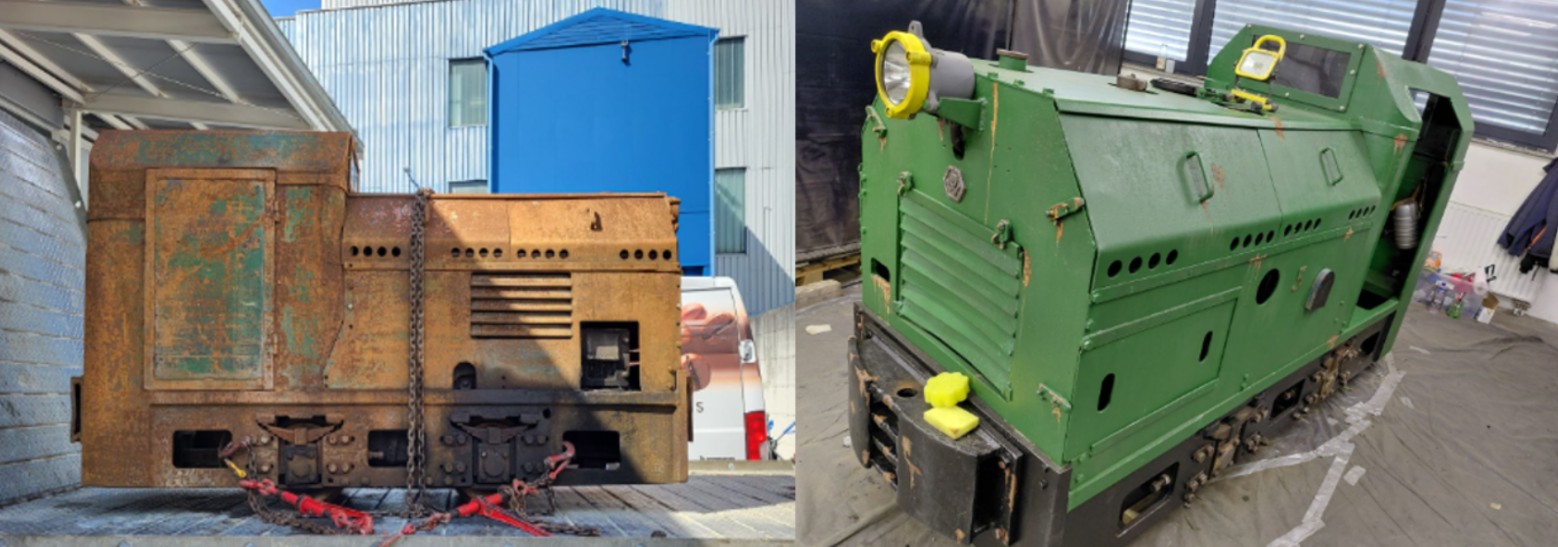
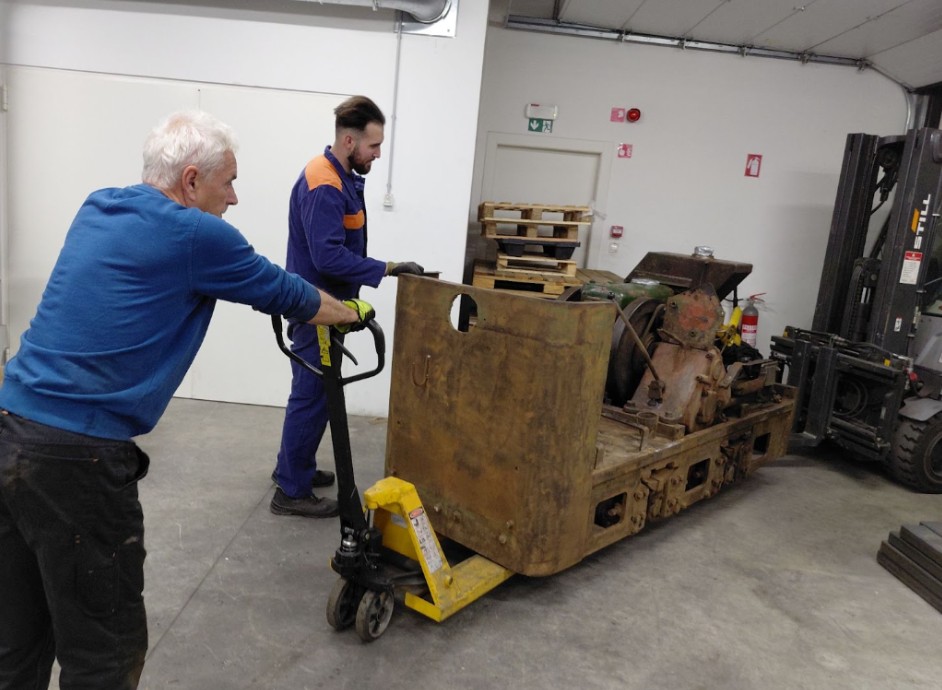
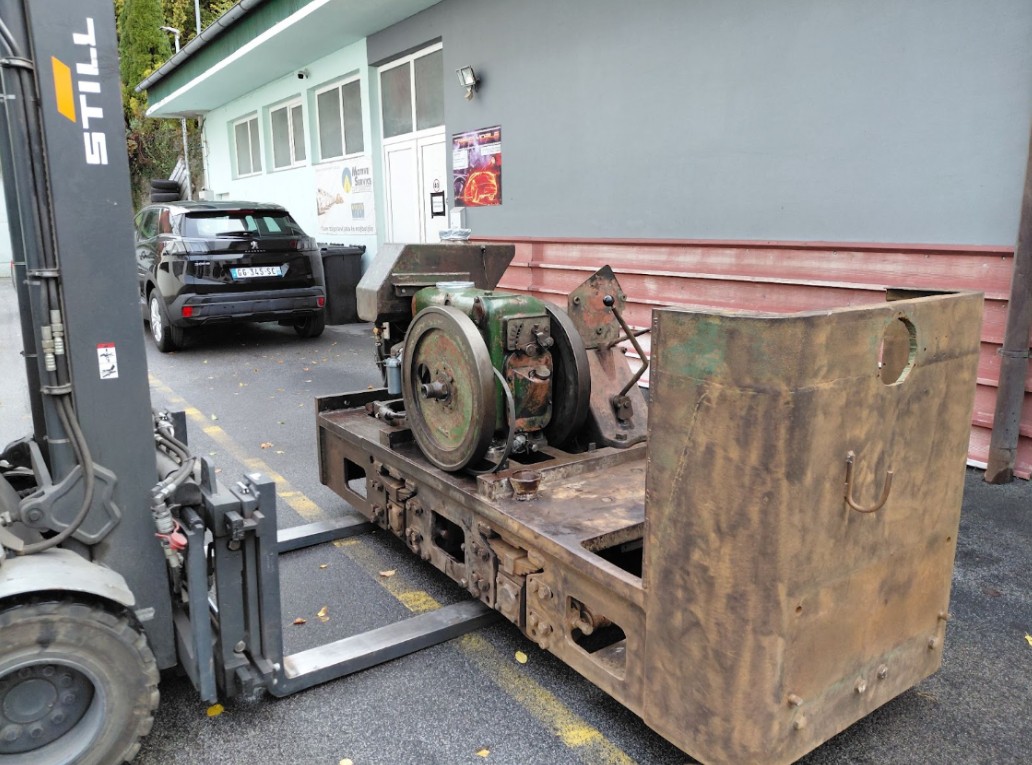
Jenbach locomotive - condition before restoration
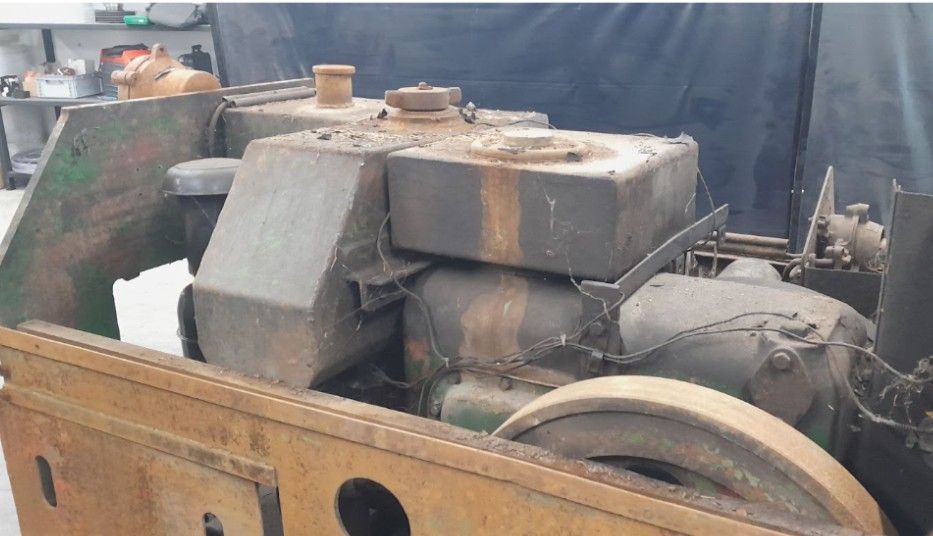
The restoration of the locomotive started in September 2025, when we brought it back from Ajnzer, where it had been »parked« for many years. The photos below show that it was not in the best condition.



Diligent hands, brilliant minds
Perkmandeljc Mining Museum and Ethnological Society came to our rescue with his expertise and the knapsacks that lived with this mining technology. And finally, we found a detailer so that the locomotive could be restored to its former appearance.
Master knapsacks: Tomšič Jakob - Rački, Leskovšek Lado - Lesi, Pangeršič Anton - Pangi
Master of colouring: Aleš Bedič
All of them were the main players in the restoration of the old »Queen«, and the guys from Katapult Metal also came to the rescue.
In the beginning, it was ... KAOS
»Let me tell you ...«
»I don't know, there is a vedu un ... kugaježe ... you know ... a little further from the drajershoht there was a duma ... which was one time at the lamparn ...«
»Lega ... we have nothing to fake ... let's put it all together, let's put it all together, let's put it all together, let's put it all together ...«
»Yes, you know ... they've done it with the one at the Theresienstadt rova ... and what a mess it is ...«
»Nothing... demo something... and he'll be a pual...«
And it really started.
First, we »stripped« her naked ... we took away her fluids ...


.
... pull out the nerves ... and the guts ...


.
"Full Monty":

.
Washing:
.
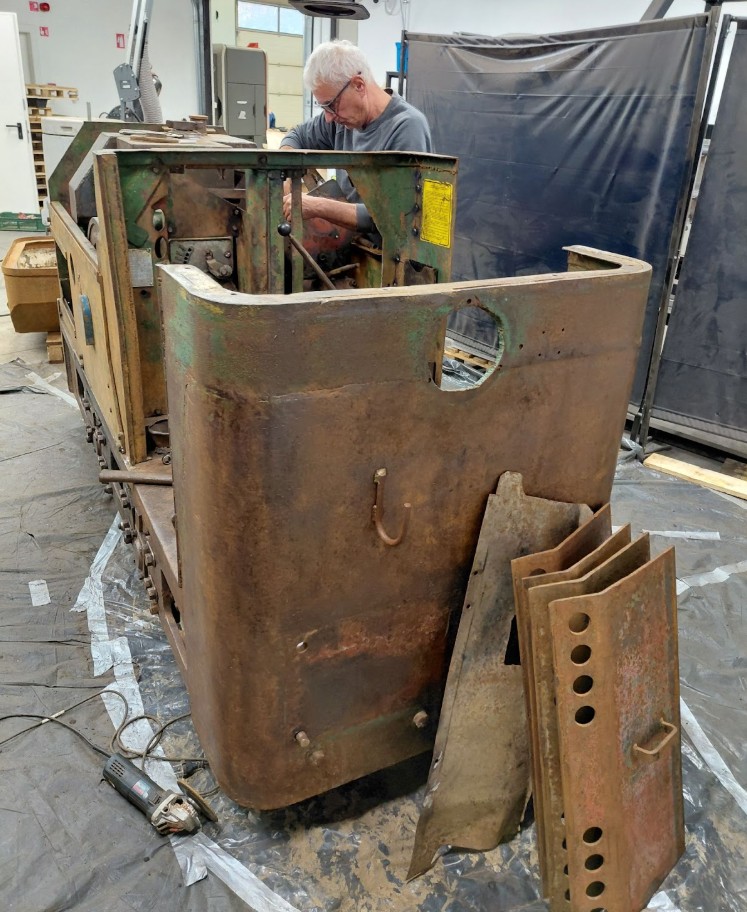
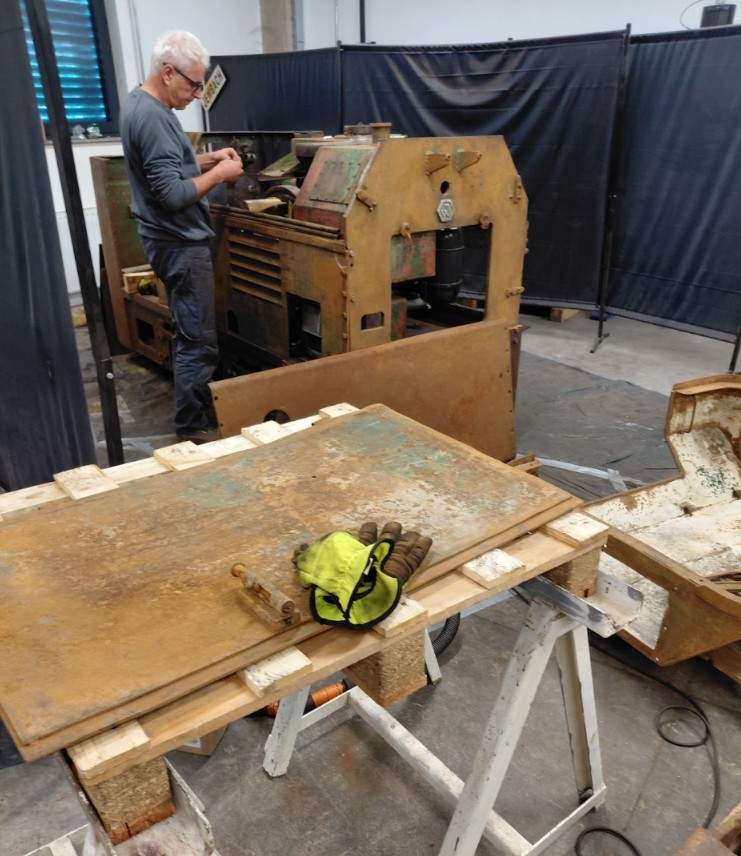
Various repairs followed ...
.
... and reassembling - so that everything fits ...
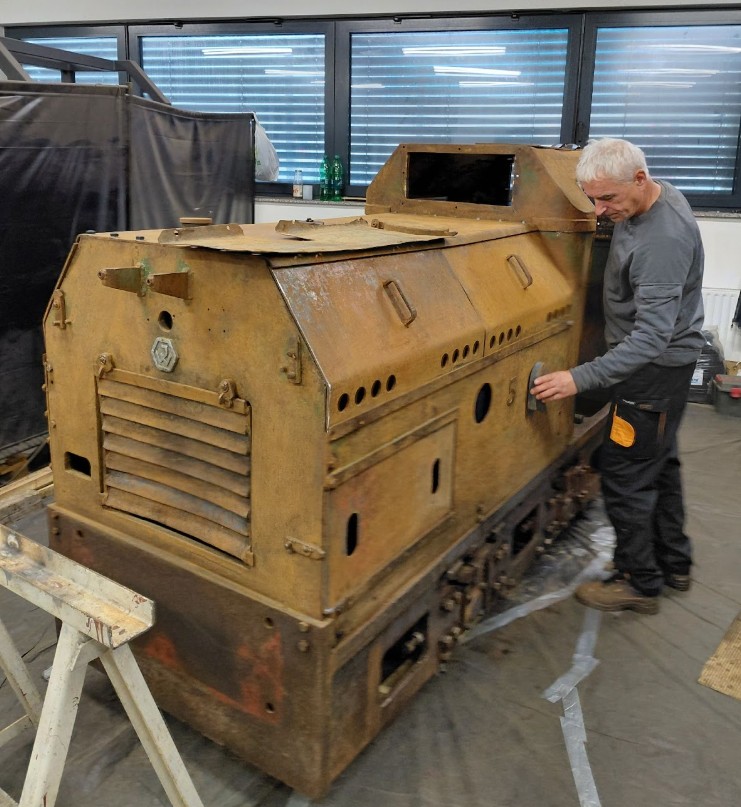
.
Then there's the painting and the artistic addition:


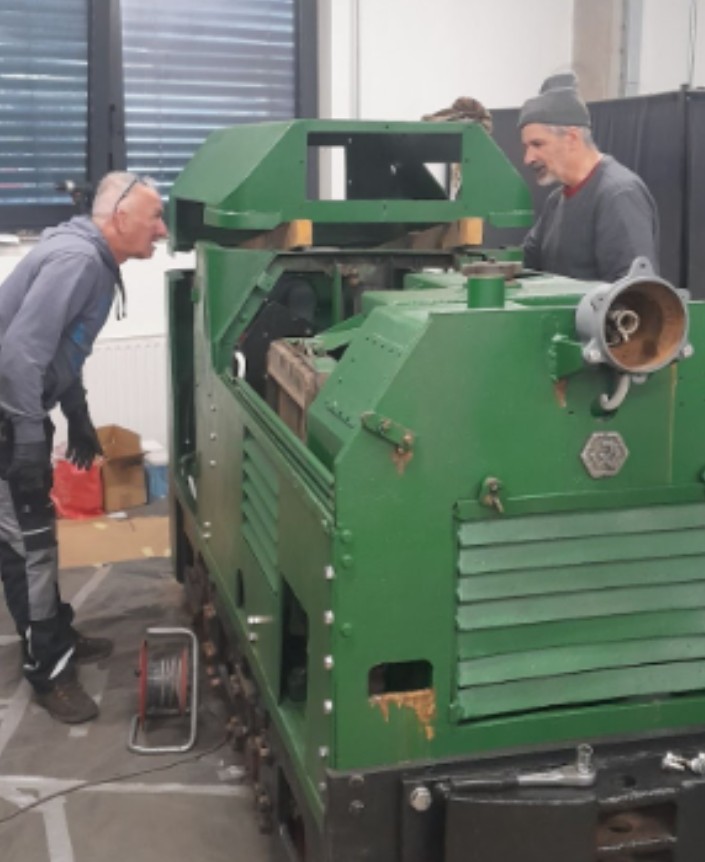


.
RESTORED!
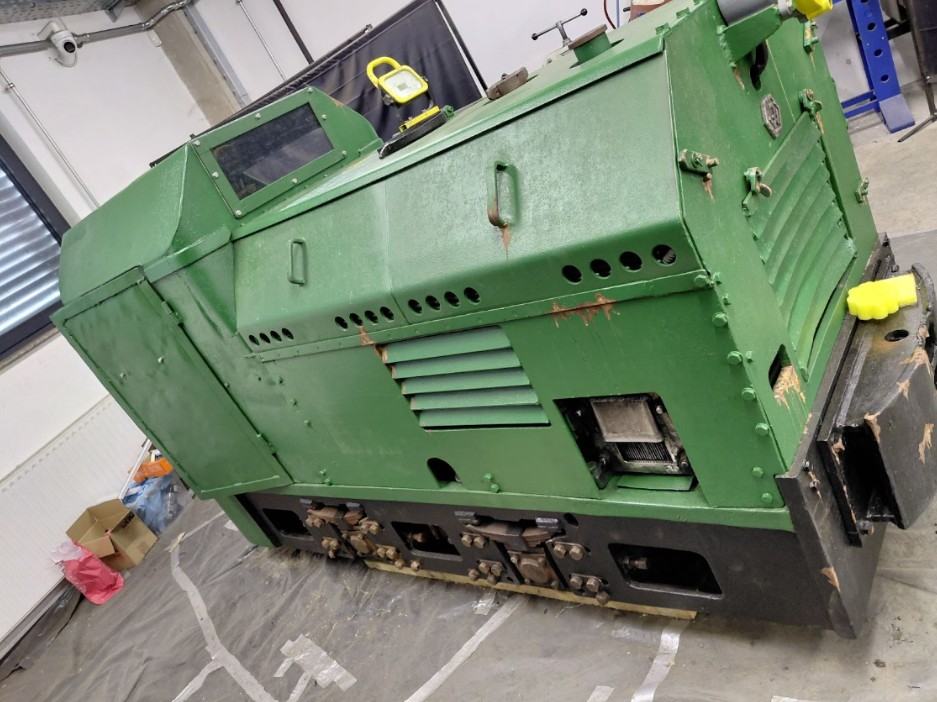
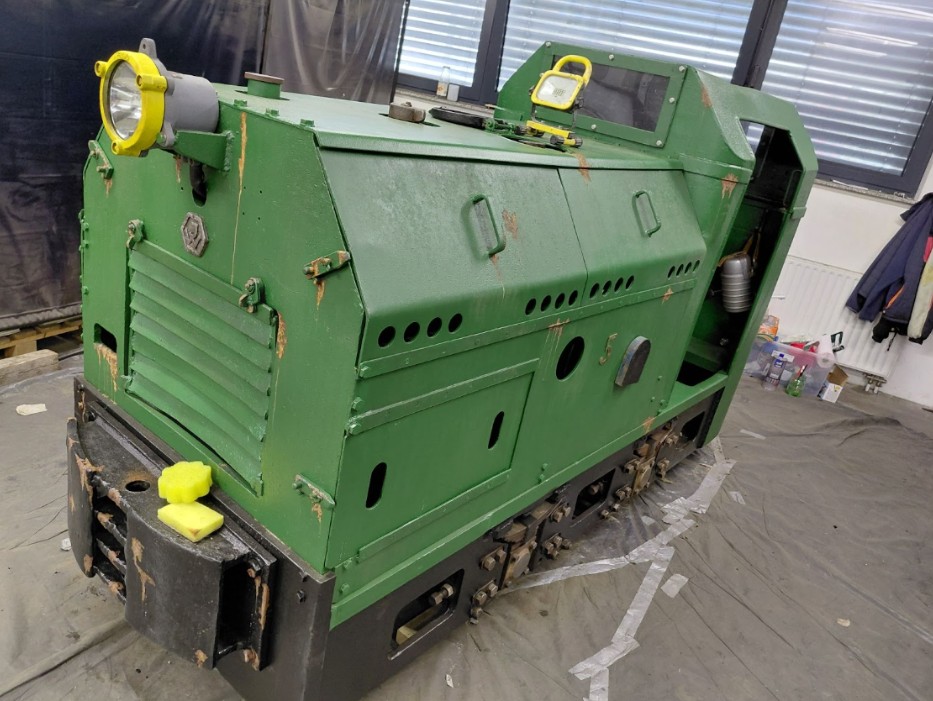
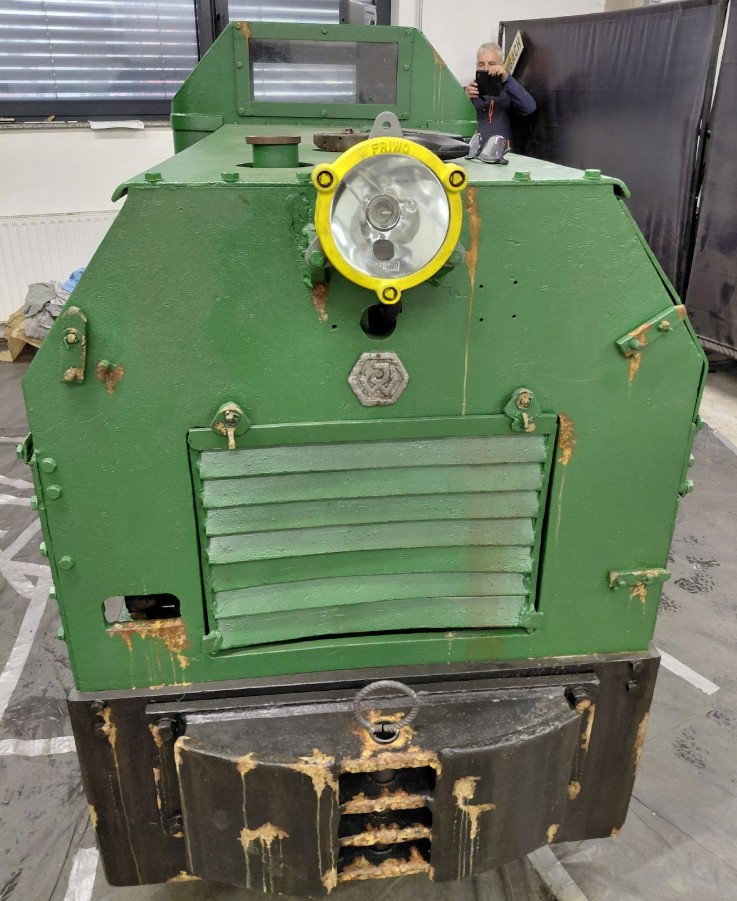
This yellowish looking »rust« is not »rust«, but the art of our master painter Aleš Bedič. It's hard to describe, you have to »postulate«.
When the machine »whirred« and the eyes turned red ...
It was Tuesday, 16 December 2025, a very special day, because at 12:00 our »Friday« (so named because it was the fifth locomotive in the series) »fired up« again. A day, almost a holiday.
We all got together and got to work ... It started with a little »cough«, but then it made a real diesel sound ... IT WORKED! The knapsacks remembered »the smell of naphtha, how the machine stank in the pits«. Was it just me, or did their eyes really get a bit teary?
»This reminds me of when we were fucking in the caves,« commented Toni, in the Zasavian way, without embellishment.
I still have a distant memory of these machines when they were still laufale. It's a great feeling when I think that these are really the last pieces. The last pieces of this history of Trbovlje, and restored to really high standards.
Well, some of us would like to take it for a little ride around the workshop ... »We can put a couple of fossils on the ground...« Yes, there wasn't much missing.
Jenbach No. 5 will not find its place under the sun ... sorry ... under the cave buttresses for some time yet, as our intention to transport it to the cave and properly dismantle it there has not yet met with fruitful results. Jureto's answer to the question »Where does cave equipment belong?« »In the cave!« And that is where our efforts are heading. Well... sometime in the near future.
.
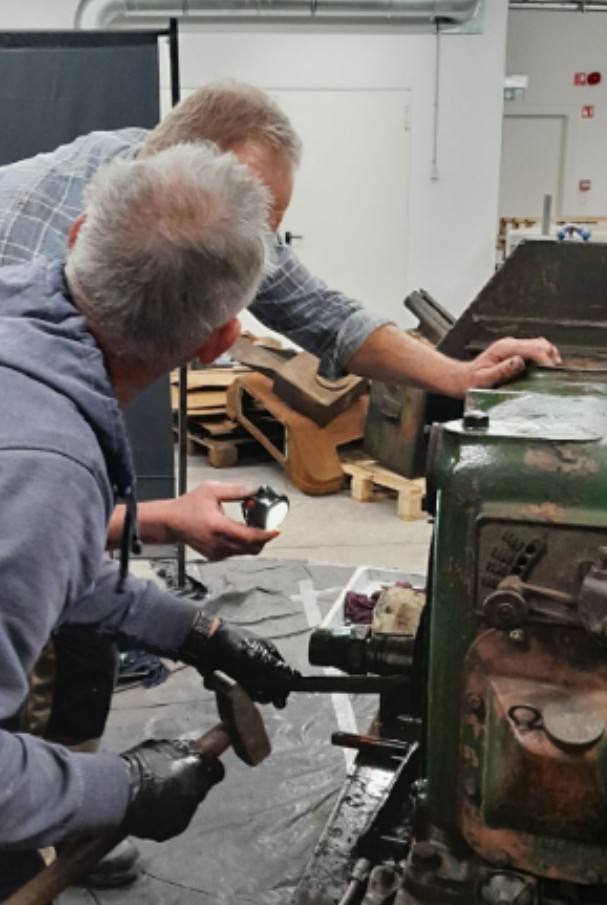
Jure is beaming with pride too: »It's only natural that memories fade, machines go silent and stories fade into oblivion unless they are deliberately given a new lease of life. It is a special charm that the locomotive was restored by the knappers who actually used it in the cave. Not only is the locomotive superbly restored, but it is also working again!«
.
For the more technical souls, a few more details
About Jenbacher:Jenbacher-Werke was an Austrian manufacturer of diesel engines, locomotives and railway carriages. The factory started producing narrow-gauge railway locomotives in 1949 and production ended in 1999.
Their main products were locomotives with the designations JW8, JW15, JW20 and JW50, of which about 2,450 units were built between 1949 and 1989, including about 1,180 JW15 units. A larger 100 hp locomotive, the type JW100, was also built in small series from 1952. From 1961 onwards, new types of 40 hp and above were introduced. These had hydraulic power transmission. After 1989, a few more individual units of the newly developed type JW26 were produced.
Jenbach JW 20 GS, number 5, year 1959 (our locomotive): In 1950, production of the »Jenbach 20« locomotive also began, which was largely similar to the JW 15, but equipped with a 20 hp engine. The JW 20 locomotives were 2,340 mm long and 900 mm wide (for track gauges of 500 to 600 mm) or 1,100 mm wide (for track gauges of 600 to 800 mm), and weighed 3,800 kg. The wheelbase was 800 mm and the minimum radius of curvature was 7 metres. The locomotives were equipped with a gritting device. They reached speeds of 4 and 8 km/h with a two-speed gearbox. In first gear they could carry up to 90 tonnes on a straight line and 15 tonnes on a maximum gradient of 40 degrees. The driver's seat also served as a toolbox.
In addition to the standard version of the JW20, there is also a mining version made to the specifications of the mining authority. This version is designated JW20G, while the JW20GS Schlagwetter-schutz is additionally equipped with cave gas protection. The robust locomotive body of the mining version is made of eight millimetre thick steel plates. This increases the weight by 10 % compared to the narrow-gauge version, to 4,200 kg. By the time production ceased in 1989, a total of 660 units of the JW 20 type had been built.
Serial numbers were not allocated consecutively, but in specific blocks for each model, and sometimes even duplicated when the planned block of numbers was exhausted.
Interesting fact: From various sources (Youtube, FB, Websellers ...) it can be traced that machines with this kind of engine are still in use (mainly mounted on tractors). And another thing: these kind of cave locomotives were not switched off/on, but worked continuously for days and nights, except for servicing, etc. And also: how many huns did it normally carry? 24, but it managed 48 ... just a bet.
Locomotive specifications:
- Engine: diesel, 20KS, JW 20 special version single-cylinder four-stroke engine
- Speed: 1st gear up to 5km/h, 2nd gear up to 8.2 km/h
- the tractive effort is 94 tonnes in 1st gear and 46 tonnes in 2nd gear
- empty locomotive weight: 4.2 tonnes
- service weight of locomotive = 4,35 tonnes
He wrote: Miran Skobe